Everyday objects as vessels of memory
The Museum of InnocenceEveryday objects as vessels of memory describes how the novel’s most familiar things acquire the power to preserve a vanished life. For Kemal Basmacı, a glass, a hairpin, or a saltshaker can hold more than a recollection: each carries the textures of a particular moment, the relationships formed around it, and the knowledge that time has passed. His growing collection turns private longing into a material record, eventually giving form to the Museum of Innocence and to the story told through it.
Objects and the Pain of Time
The idea begins with retrospective happiness. Kemal identifies his first sexual encounter with Füsun as the happiest moment of his life, but recognizes that the moment can be named only after it has passed. To call it the happiest is also to accept that it will not return. The pain of that recognition can be borne, he argues, through possession of something belonging to the instant: mementos preserve its colors, textures, images, and pleasures with a fidelity that even the people who shared it may not retain. The earring that falls onto the blue sheet during their lovemaking gives this principle a precise, intimate form: a small object becomes inseparable from the moment Kemal later treats as the height of happiness.
This view distinguishes a remembered instant from the continuous line of time. Moments may offer enough happiness to sustain a lifetime, but a line joining them also leads toward its end and makes mortality difficult to ignore. During the years of dinners at the Keskin home in Çukurcuma, Kemal gathers objects Füsun has touched because he hopes they will preserve moments for the future. A television clock, which Füsun studies to check whether she has set her watch accurately, belongs to ordinary social time; her smile, as Kemal remembers it, belongs to the fleeting present he wants to keep. The objects do not stop time. They let him return to particular moments while making their loss visible.
Objects in Grief and Family Memory
The force of an object is not limited to romance. After Kemal's father's death, familiar belongings in the bedroom become vessels of a childhood that can no longer be recovered. Old phone bills, telegrams, medicines, and the cedar-scented bedside drawer gain immeasurable value through their connection to the dead man. Even the ordinary view down Teşvikiye Avenue becomes an irreplaceable memento of the world that has changed. The objects have not necessarily changed in themselves; bereavement has altered the meanings they carry.
A faded velvet jewel box links memory to an earlier loss and to a lesson passed between generations. Kemal's father reveals that he had bought pearl earrings for a woman he once loved, intending to seek her forgiveness, but fate prevented him from giving them to her. He gives the earrings to Kemal and proposes that Sibel wear them; seeing them would remind Kemal of his father and of the obligation to treat women well before regret makes such care impossible. The jewels thus carry several histories at once: an unfulfilled gesture, the father's remorse, his advice, and the future marriage he imagines for his son.
Collecting, Absence, and the City
As Kemal tries to escape his attachment to Füsun, he first attempts to forbid himself from visiting the Merhamet Apartments and from touching things that remind him of her. He then redraws his mental geography of Nişantaşı. The Şanzelize Boutique, the apartments, Kuyulu Bostan Street, and other sites connected to their story become prohibited or dangerous areas; even permitted routes must be crossed quickly, lest recollection deepen his suffering. This map makes memory spatial: the city is not neutral ground but a terrain marked by degrees of exposure to the past.
Avoidance does not erase that past. Füsun’s imagined ghosts appear in cinemas, markets, streets, and crowded places, and Kemal begins marking these sightings on his mental map as well. Locations where the apparitions recur become places he regularly visits. Istanbul turns into a network of signs that recall her, so that the attempt to manage memory also organizes his movements around it. The map records both what Kemal tries to escape and what his longing repeatedly draws him toward.
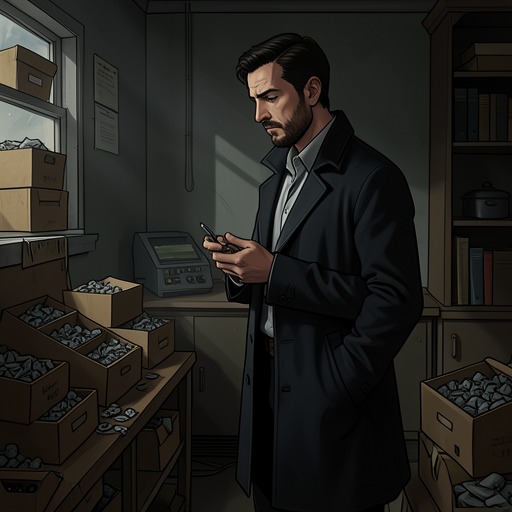
His collection develops through comparable acts of keeping and substitution. At first he takes small, easily missed things, including matchboxes, cigarette butts, saltshakers, coffee cups, hairpins, and barrettes. Later he removes more noticeable objects, such as ashtrays, cups, and slippers, and replaces some with new ones. The practice is private and shameful to him, even as the changing objects on the Keskin television reveal that belongings are disappearing. A broken porcelain dog gives him an excuse to bring a replacement into the household. Collecting therefore involves more than saving an object: it changes the object’s place in a family’s routines while concealing the collector’s purpose.
From Private Collection to Museum
A New Year’s Eve tombala gathering shows how the same object can mean differently to its possessor and its household. Kemal brings an antique glass associated with his grandfather, Ethem Kemal, and with his last rendezvous with Füsun on the day of his engagement. The Keskin family accepts it among the ordinary game prizes, but Füsun does not recognize its connection to their past. When Tarık Bey later uses it as a raki glass, Kemal cannot freely dwell on the memory it contains. The glass is at once a household possession, a game prize, and a private memorial whose significance is not shared by the people around the table.
Paris museums help Kemal imagine a different future for his hoard. Encounters with collections devoted to intimate and everyday belongings convince him that the life others consider wasted can be told through things Füsun left behind. Museums make it possible to display a set of plates, collected saltshakers, letters, receipts, and even Tarık Bey’s false teeth as parts of a coherent personal history. His experience also directs attention to arrangement: he finds that his contentment comes not only from the objects themselves but from the harmony created by placing them together. The collection can become a home for memory even apart from the original household.
The objects also exceed the private story that first gave them meaning. A saltshaker from a small Istanbul factory appears in restaurants, a New Delhi halal restaurant, a Cairo soup kitchen, Barcelona street markets, and a Rome shop. Its many copies connect the Keskin table to the daily lives of families far beyond it. Objects circulate, are replaced, and pass through intimate use, often without their owners acknowledging the attachments they have accumulated. That wider circulation gives ordinary possessions a social history alongside Kemal’s personal one.
When the collection is transferred to the Çukurcuma museum house, Kemal recognizes that its objects need an annotated catalog recounting each one’s story. The line joining separate moments can be understood as time; the line joining objects that contain those moments can be understood as a story. In this way, the museum does not merely store keepsakes. Its arrangement and catalog turn them into a narrative that can be encountered by others, converting private remembrance into a public account without removing the objects’ traces of daily life.